The Best Use of Human Life
Source: Shri Sudarshan Sandesh, May07-Jul07, pages 5-16 (as Published)

Estimated reading time: 20 minute(s)
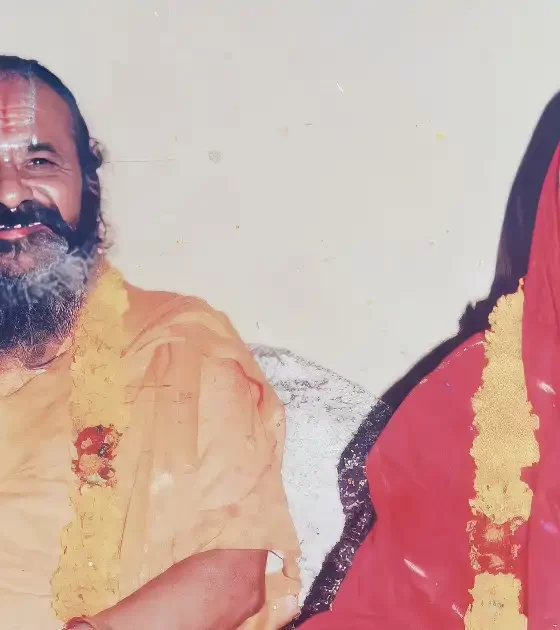
by Srimad Jagadguru Ramanujacharya & Swami Sri Purushottamacharya Ji Maharaj
You are the soul, not the body. Weapons cannot harm the atma, nor can they kill it. Fire cannot burn the atma.
The person who has sent us into this world is known to be the king of all the three worlds, and that Satchitaananda (or The Supreme Spirit) is the absolute. He is our father, the supernatural. The supernatural who has given us this human form of life is very kind. We have forgotten this benevolent God or Bhagavan and tend to give importance to our body and the world in which it exists. This is when all kinds of evil qualities find place in our hearts. We are proud of our human body. We think that this body, given to us by God, is ours, and we are the body, so everything that we do is only for this body. These thoughts lead us away from the path of duty and ingeniously forget the very purpose of this human life given to us by God. It is evident here that we walk the path of destruction of human life.
We are the creation of God, and this creation is made of two aspects. One aspect is this body, and the other is the soul. Lord Krishna has referred to this as Kshara and Akshara in his famous Bhagavad Gita, where Kshara is one whose destruction is certain or that which is inanimate, and Akshara is that which cannot be destroyed or that which is conscious. The body or jada, the inanimate, has a specified time of existence and has to change sometime or the other. It is just like how a person changes his old clothes. So, where is the question of moha or delusion? We have been bestowed with this human form to fulfill the activities of this world by doing good or satkarma. So, one must use this human form only for doing good or for satkarma.
The other aspect bestowed to us is chetana or the conscious, and this is a part of that eternal being. He is sat (good) + chit (the supreme) + anand (the existence) satchitaananda or the Supreme Spirit. We are a part of that Supreme Spirit.
We are a part of that eternal Bhagavan or God, a part of the extraordinary form. So, we must be doing whatever is specified by him or that which has been shown by him. Whatever we do must only be for him.
We must realize that the body in which we exist is not ours. If we focus our minds on it, then we can never have a glimpse of the chetana swaroopa or the conscious form or atma, the soul. We will never be able to attain that level. But, if we put in efforts to work for that soul and focus our minds on it, then our body too benefits from it. If we just wander and stray away from the humane qualities of life, we will not live in peace and harmony. On the contrary, if we totally submit ourselves at the feet of the Lord, we would attain eternal peace. This is the most relevant aspect of our life as a human being.
We are souls and are the conscious aspect of Bhagavan, and we need to harmonize with Him. We need this conviction in our lives and need to perform our karma or action with our full heart and mind and seek darshan (see the lord) of the Bhagavan.
I am the chetana swaroopa or the conscious form and realize that this body is not ours. I am not the body. The moment I am able to wholly accept this, the conscious form would rise in us. There will be a total transformation in you where the body and soul will become two different entities like buttermilk and cream. In the process, the body and soul separate just like how buttermilk and cream separate after churning the curd. We have to obtain the purpose of life like the cream, and we will be able to realize buttermilk-like body. We will know the value of both, buttermilk and cream.
Bhagavan Sri Krishna in the Bhagavad Gita has ordered and clearly stated that the one who is born will certainly perish. A young person would certainly grow old, and that is just a body; it is definitely not you. When you are not the body, what is the point in being unhappy about it, and where is the necessity to celebrate? We have to celebrate the fact that Bhagavan has given us this human form of life. We have to use this human form to serve the entire humanity for having been born as a human being. It is necessary to spread the message of the kingdom of the lord and establish Dharma and eliminate Adharma from this world.
Night and day, morning and evening, are the two aspects of the world. Just like this, there are two types of the human form: humankind and the demon. Let us understand that if a person does good karma, then he is a human being and is dear to Bhagavan. But, on the other hand, if he follows the path of Adharma or indulges in sin, he is a demon, and certainly, God will be intolerant toward him. A person becomes a demon because of his actions. God didn’t instill a demon in him; rather, he turned into a demon because of his actions and that too because of his Adharma.
Let us discuss the personality of Ravana. He was born to a Brahmin family, a learned man, and a very powerful ruler in his time. But look at what he actually did. He followed the path of Adharma, Akarma (wrong actions); he was oppressive, exploited various forms of life, and was highly egoistic and insensitive. He was so immersed in kama (lust), krodha (anger), mada (arrogance) that he totally forgot the purpose of his life. He adopted the lifestyle of a demon and turned into a demon. Just look at his end, he was killed. His own relatives, sons, kith, and kin were killed in front of his eyes, and finally, he lost his life.
Vibhishana, his brother, on the other hand, adopted the path of human nature and the name of the Lord. He worked for God and remained a human being. Sri Bhagavan blessed him with power, wealth, and happiness. He is a good example of a good human being in this world. He never toiled for his body but worked for God. He was dedicated to the Lord and joined hands with the eternal truth.
While talking about our Chetana swaroopa, Lord Sri Krishna clearly states that:
Nainam Chhindanti Shastrani
aa
Nainam dahati paavaka: (Gita 2/23)
You are the soul, not the body. Weapons cannot harm atma, nor can they kill it. Fire cannot burn atma.
When we are the soul, where is the place for misery and unhappiness in this inanimate body? The body is transitory and perishable and can be harmed and destroyed at any point in time. So why then should we work for this perishable form, why create unhappiness in ourselves and create unpleasant situations for God?
The lord has said that atma is never born, it is never young, and never grows old, and there is no change in its form. Whereas, when the body takes its birth, it grows young and then grows old. It is afflicted by several diseases. Whose position do you think is better or rather who is greater – a body that is filled with unhappiness and misery or the form of the lord himself, the atma?
The development or destruction of the body does not make a difference to the soul. The disease in our body does not make a difference to the soul. When the soul is greater than the body in every way, then why should one give importance to the body at all?
A human being needs to give complete importance to his soul rather than his body and dedicate himself to the Bhakti (devotion) of the Lord. This is the most essential part of human life. He must take the name of the Lord and lead his life singing in his praise. One must always remember that it is the body which dies, and it is the body which is burnt. We neither die nor are we burnt. We traverse through various yoni or forms of birth and work toward attaining moksha or salvation. There is no such thing that takes place in the body, he takes birth and he dies. He is just like a shirt that we wear and remove.
The Lord has referred atma to “sarvagata” (2/24) in the Bhagavad Gita. He is omnipresent. On one side, there is the body, and its destruction is certain. On the other side is the soul, which is neither born nor does it die. It is a part of the ajara (that which never grows old) – amara (eternal) – avinaashi (indestructible).
The two are a creation of the lord himself. But, their nature is different and completely different. A person born in this world is born to the mother, his body comprises pancha bhutas or five major kinds of matter. He is born on this earth; he exists here and later dies. He once again becomes a part of the soil. The five materials in his body once again separate and turn into water, air, space, earth, and fire. These five major kinds of matter once again come together and form the human body. When the agreement is over, they separate and take the form of their respective characteristic material. This is not the case with atma. He takes to this body; he goes through worldly life and, at the end, reaches God.
But, there is a relationship with the human body; these have nothing to do with the soul. Some people have an inclination toward spirituality and have a relationship with the body too. They express their desire to attain the lord through this body. But, actually, who does this? Those who do not have an eligible guide take to such thinking – they will not have a Guru or a teacher.
We must understand that just by seeing the form or the murthi of the Lord, the bhava or emotions are easily created, but bhava or emotions come first, and the murthi comes later. If there is no bhava, no matter how beautiful the murthis are, there is no devotion and there is no surrender. But, on the contrary, if there is bhava, there is complete surrender even in front of a Saligram, which just looks like a stone. But, it is the effect of bhava that transforms the stone into the form of the lord.
This is why our focus must be directed toward the soul and not toward the body. It must not go toward the body because the body hosts a sea of misery and unhappiness. It is a place for misery and unhappiness. Despite having to face innumerable challenges, the body finally has to perish. The Lord Himself cannot save it from destruction. So if the destruction of the body is certain, then why must a person be even concerned about it? Atma is devoted to the Lord and attains moksha singing in his praise. While attaining salvation, he reaches the lotus feet of Sri Bhagavan.
As the soul is reborn, it has to go through several forms of birth and life because of its actions–wrong actions, the good and the bad karma in its previous birth. The fruits of good karma are good, and the fruits of bad are bad. This must be taken as the absolute truth.
But, people think that the body indulges in good and bad actions and all the actions finally perish with it. But, it is not so. The body is just the means to perform our actions. Just like how the owner of any company gets his work done through several of his employees and people tend to think about the progress he makes. All actions of various births last with us forever. The soul is the one that faces the fruits of bad or good actions in human life.
We are the actions in our lives, the fruits of actions that we experience – the body has nothing to do with them. The body just wanders in this world; we do not wander in the body but go along with the body. The soul is attached to the body. As long as there is life in the body, atma stays with the body; the moment the body perishes, the soul leaves the body and is on the lookout for another body. The body and soul live together but for a definite period. The togetherness is just for a period of time. The soul does not require a body, it can exist in the absence of a body too, and we know them as the divyatma, pretatma, deva, gandharva, etc. These names are assigned to them based on their actions.
The soul takes to various bodies and various forms of life and births, but nothing actually happens to it. It does not have any kind of loss. It is the body that perishes in the deal.
Dehesminpurusha: para: (Gita 13/22)
aa
Though we are with the body, we are never in the body. We do not involve ourselves with the actions of the body. We perform the actions. The body is just a means of action. In spite of it, we still tend to have an attachment toward the body. As soon as we awaken from sleep, we say, “Oh! I slept a lot.” Whereas, while sleeping, we actually do not know who we are and where exactly we are. The body was actually dead, and at that time, there was no consciousness at all. The bodily attachments like desire, arrogance, delusion, greed, or attraction of the senses were totally absent. Then what is the situation of our sleep known as, or what happened during the time we were asleep? It was our soul that was present. The body can have the desire of want or not want. It has no power to separate the souls, and so when the body is asleep, the soul stays awake.
Basically, the soul and the body are like light and darkness. Their existence and importance are because of their mutual aspects, but the desire is explicitly light. Just as darkness disappears when light falls in and the existence of both at the same time is impossible, the soul too requires the body, but there is no possibility of both being together at the same time. The simple reason is that the soul is the very form of the lord, which is chetana or consciousness, and the body is made of the five major kinds of matter and has an end one way or the other. There is no specific objective of this body, and it is just a means for the soul. The atma has an objective. Its sole purpose is to establish whatever has been told by the lord. It has to perform all actions ordained by the lord. Singing bhajans in his praise, the soul must perform satkarma to achieve the objectives of the lord. The body must only obey the instructions of the owner.
When Arjuna asked Bhagavan Sri Krishna about the ways of achieving moksha, he said that you must first of all forget that you are a body. You are not the body, and whatever is present, is lifeless. You are the soul, and you are the conscious part of the lord. The form of life is in you. As long as you think that you exist in a body, there will be no positive effect on your mind and heart, no matter what upadesha (teachings) I give you.
The process of birth and death takes place simultaneously. Firstly, the baby form, then the person grows young, and then he becomes old. There are changes in the form of his body. The death of his body takes place minute by minute, but the soul never dies. The soul has only one form.
The form of the soul is always the same. Several changes take place in the body with the change in place, time, situation, and atmosphere, and these changes in the body are due to its karma. Following the cycle of birth and death is the duty of the human body. Changes take place in its form, but its nature and trend remain the same. It establishes unison because of the worldly reasons ordained, whereas atma establishes unison with the lord. The unison of the soul is directly with the lord. The soul talks to the supernatural just as how people talk to one another on the mobile.
While leaving his body, King Parikshit said, “Now I am going to die,” and Shukradeva replied saying, “Oh! King, why are you talking like an animal?” Please take note of “talk like animals.” Shukradeva is saying this to such a great king. He said that because animals do not have knowledge and the power to analyze. “Oh! King, you are not the body. Just as this body was not yours yesterday and today, it will never be yours even tomorrow. It is exactly the opposite of your soul. Your soul or you existed yesterday and today, and you will exist even tomorrow. The soul is ancient and everlasting. So, that which is greater is also eternal, and that which perishes is not you. You will not die, but your soul discards the body.”
Bhagavan Sri Rama, bestowing the Amrita Gyan (knowledge of nectar) to Bali’s wife, said:
Chiti jala paavaka gagana sameera,
aa
Pancha rachita ati adhamma shareera.
“This body is made of five major kinds of matter and one day will disappear into the same kinds of matter. There is no need for you to be unhappy. Lead your life just by taking the name of the lord.” Queen Tara was delighted to receive this knowledge from the lord.
The body changes its form every minute. It awakens, it sleeps, and it dreams. The soul remains the same in these situations. While traversing through three different situations, the body expresses three different bhavanas or emotions. In its state of awakening, it sometimes laughs and sometimes cries; it dreams of good and bad situations and responds to them and exhibits different postures. When he sleeps, you will think he is dead. Whereas, atma too traverses through these situations and it remains in the conscious state. Just as how a traveler goes to visit the four religious places of worship and visits one after the other, but doesn’t create a sense of belonging with the four places. He does not establish any connection with the four places of worship but considers the lord to be his own. The soul too changes from one body to another and still retains the dialogue with the lord. It does not have any attachment towards the body. The attachment to the body does not exist because it cannot carry the body it existed in the previous yoni or birth to the next birth, and so, it has to leave the present one and traverse into the other. What is the point in deeply associating oneself with something that has to be discarded some day or the other? We must never even think for a moment that this body is ours.
There are so many kinds of materials we can use that exist in this world like solids, liquids, etc. We cannot even take a molecule from all the things that we own into the next birth. Similarly, we cannot take the present body into the next birth. We can just make use of it in the present birth, and this is exactly why the lord has gifted us this body. Though it has been gifted to us by the lord, it is not ours because it is only for one’s use. Use and leave.
What do we take with ourselves? We just take the righteousness and destiny earned in our present birth. Whatever good or bad we do goes with us, and we need to account for it. The good and bad we earned in the previous birth is the basis on which we are given the new body. It may be something rewarding or may be something that turns out to be a punishment.
So why must we aspire for a body at all? We must aspire for that which is ours, and that which is ours is the lord himself. The lord himself has said:
Mamaivaanhso jeevaloke (Gita 15/7)
aa
Life is a part of me and very much a part of my form. He is ours and we belong to him; everything else is a drama wherein there are several characters that play their role, and we need to act accordingly. It is just like a play where one is a king and another is the minister, and we all play the game king-queen. Everything that exists here is a mere drama, and nothing really exists at all. We need to act, and so we act; we need to live, and hence we take the form of a human body. We must get attached to this body of human life. The moment we take cognizance of the fact that this body is ours, we are afflicted by several materialistic problems, and we tend to stray away from the sole purpose of human life like following the path of humanity, spreading the word of humanity, attaining moksha, and uniting with the lord.
All problems are a part of this body and never have anything to do with the soul. The atma errs when it begins to love the body, and the moment it does this, it will certainly move away from its father, the lord. It will not be able to have a guide for several miles. There will be no one to take care of it.
The argument seems quite logical because how do we consider it ours when we have no control over it. We cannot make any desired changes in the body as it is governed by the principles of nature because it is a part of nature. We are a part of the lord, and hence He is the one who rules our lives. So it is evident that there are two powers that rule the body and the soul. One is worldly, and the other is divine.
The body is worldly, and the soul is divine.
How can a worldly thing be useful to a divine power? Worldly things, situations, and powers can only be useful to the things in this world. So this evinces the fact that no worldly thing can be of any use to the soul that is divine. Hence it is just foolish to have any attachment to the body.
Just as I have mentioned earlier, the body can only be used for a certain purpose. It is fine when one has to lead a worldly life. But, in order to do satkarma, it is the soul that has the utmost importance. Think for yourselves: what is this body in the absence of a soul? Can anyone fall in love with a dead body? On the contrary, one tends to be scared of it, and a soul is respected and worshipped everywhere. The tradition of conducting the Pitra Puja (worshipping the father) is by itself the best example of the above statements.
We make use of this body to worship the lord, just like how we use flowers to pray, but who is conducting the puja, the body or the flowers? Both of them don’t conduct the puja. The puja is done by us, and we are not the body, we are the souls.
The body is used for establishing worldly relationships. But, atma is used only to establish a relationship with the lord and follow the path ordained by the lord. A sensible person follows the path ordained by the lord, and he is a human being. A demon can never follow the path ordained by the lord. The lord says that we can never exercise our right on something that is not ours. He also mentions that I have particularly given you (the human being) the power of the intellect and have assigned you the right to use it and walk the path of truth and dharma. You must follow the path of truth and show other fellow human beings the path of truth. You are my son, and you are a part of me. My blessings are with you in your welfare.
Summary:
The article emphasizes the distinction between the soul (atma) and the body, highlighting that the soul is eternal, indestructible, and a part of the Supreme Spirit (Satchitaananda), whereas the body is temporary and perishable. It stresses that humans often mistakenly prioritize the physical body and worldly desires over their spiritual essence, leading to attachment and suffering. By understanding and accepting the eternal nature of the soul, individuals can align their actions with divine principles, achieve inner peace, and ultimately attain moksha (salvation). The teachings of Lord Krishna in the Bhagavad Gita are cited to reinforce these concepts.
Important Points:
- Eternal Nature of the Soul: The soul (atma) is indestructible and eternal, unlike the temporary and perishable body.
- Supreme Spirit (Satchitaananda): The soul is a part of the Supreme Spirit, encompassing sat (good), chit (supreme consciousness), and anand (existence).
- Human Attachment: Humans often mistakenly attach importance to the body and material world, leading to suffering and distraction from spiritual goals.
- Role of Karma: Actions (karma) performed with the body affect the soul’s journey, influencing future births and the attainment of moksha.
- Teachings of Bhagavad Gita: Lord Krishna’s teachings emphasize the indestructibility of the soul and the importance of focusing on spiritual duties.
- Importance of Bhakti: Devotion (bhakti) to the Lord is essential for spiritual growth and achieving salvation.
- Temporary Nature of the Body: The body is merely a vessel for the soul, meant to be used for righteous actions (satkarma).
- Distinction Between Humans and Demons: Actions determine whether a person is considered human or demonic; following the path of dharma leads to spiritual fulfillment.
- Spiritual Guidance: A true Guru helps individuals realize their spiritual essence and align their actions with divine principles.
- Transcendence of Worldly Attachments: Realizing the temporary nature of the body helps individuals transcend worldly attachments and focus on spiritual goals.